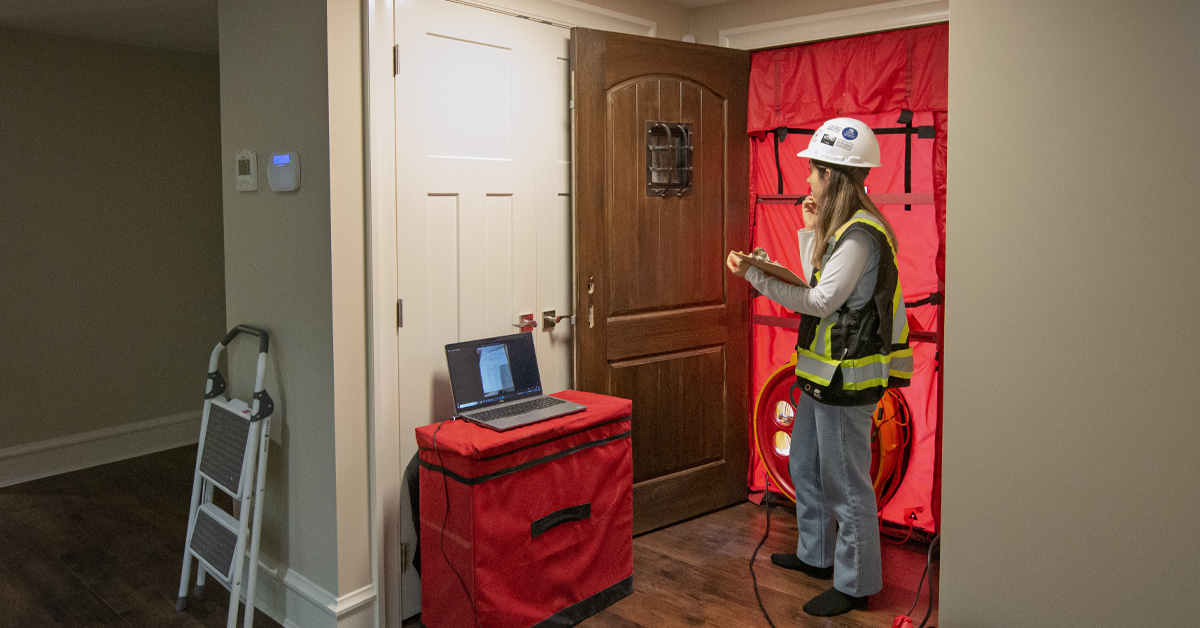
Here’s a fun fact nobody tells you when you start planning a home build: the stuff that costs the most to fix later is the stuff you’ll never actually see.
Counter tops, fixtures, that gorgeous accent wall — those are easy to point at, admire, and (if needed) redo. But the building envelope, the airtightness, the way moisture and air actually move through your walls? That’s invisible. And invisible problems have a nasty habit of getting expensive.
This is where building science comes in. Think of it as the physics behind your house — how heat escapes, how air leaks, how moisture sneaks into places it shouldn’t. Skip it, and you’re not just risking a slightly drafty hallway. You’re risking mold behind drywall, rot in framing, sky-high energy bills, and a home that fights you instead of working for you.
The tricky part? Most of these issues don’t show up on move in day. They show up in year three, or year eight, hidden behind walls that are now very expensive to open back up. A house built to minimum code can look identical to one built with real building science behind it — right up until the day it doesn’t.
That’s the gap between “built to code” and built to perform. Code is the floor, not the finish line. Building science is what happens when a builder treats the envelope, the airflow, and the moisture management as seriously as the kitchen island.
The payoff isn’t flashy. It’s a home that’s quieter, more comfortable, cheaper to heat and cool, and doesn’t develop expensive surprises a few years in. Not glamorous. Just genuinely well built — even in the places you don’t see.
Because at the end of the day, this isn’t just a house. It’s where your family will grow up, gather, and feel safe for decades to come, and that’s not something worth leaving to chance. Reach out to Sonbuilt today, and let’s build it right, together.